
Beyond Completion: Using AI to Unlock the Value Inside SCORM Content.
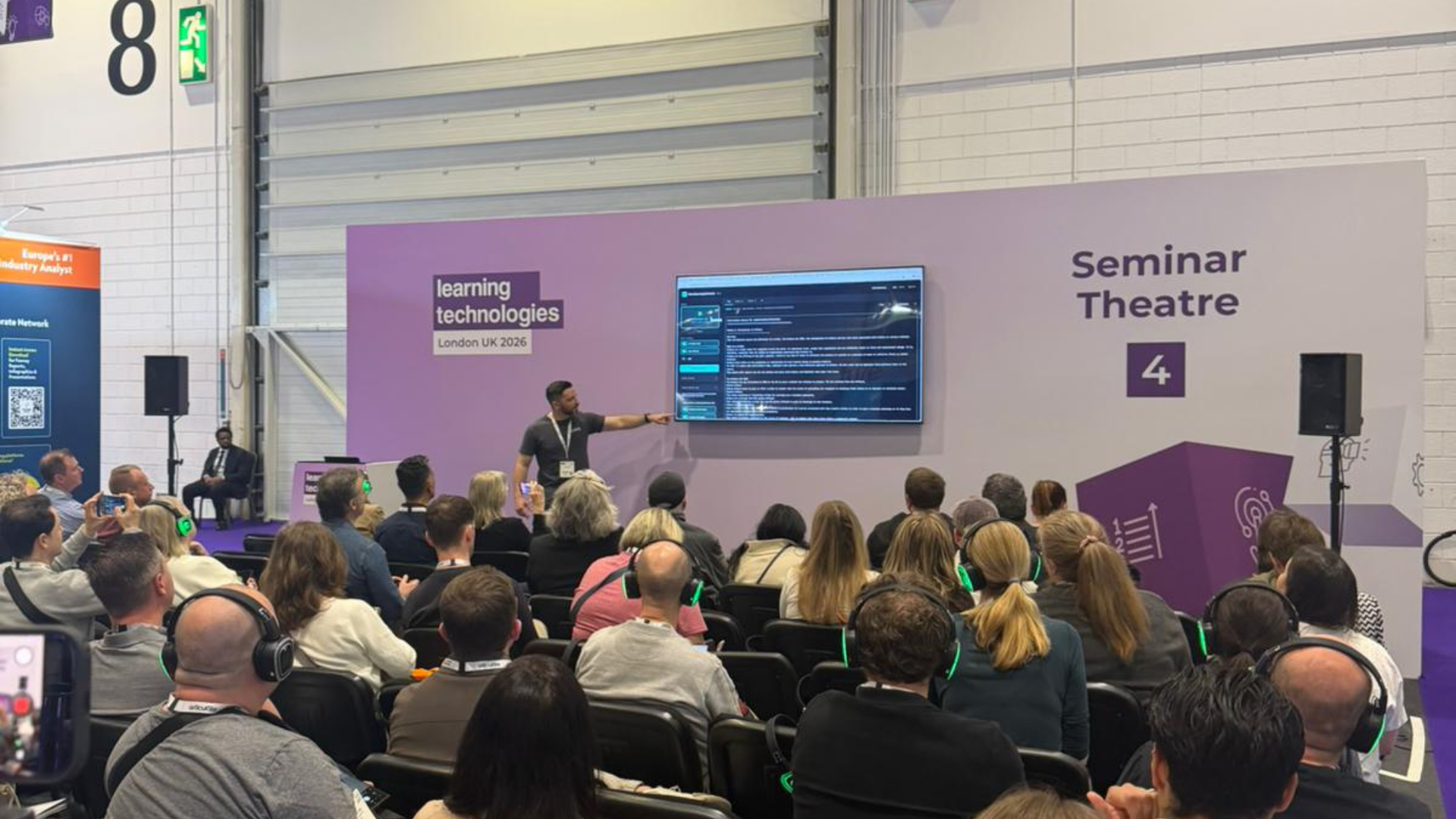
At this year’s Learning Technologies Conference, Wes Atkinson, Chief Technology Officer at Mint, spoke about a problem many L&D teams will probably recognise.
He opened with a simple but familiar scenario:
“You’ve built the course, it’s live in the LMS, people complete it… but when someone needs a quick answer a few weeks later, where do they actually go?”
That question ended up sitting at the centre of the session.
The problem with SCORM content
Most organisations are already sitting on valuable learning content.
But once courses are published into an LMS, they often end up being used for one thing: tracking completions.
As Wes explained during the session:
“The knowledge is inside. The container is the problem.”
On a technical level, a SCORM package is basically a website inside a zip file, made up of HTML, JavaScript, media, and tracking data.
Which means useful content can become surprisingly difficult to search, reuse, or adapt once a course has gone live.
The three biggest limitations
After breaking down how SCORM packages work, Wes highlighted three common problems that stop organisations from getting more value from the content they’ve already built.
Searchability
The LMS is good at tracking completions and scores, but not great at helping people quickly find the knowledge sitting inside the course itself.
Reusability
A lot of useful knowledge already exists inside learning courses, but reusing it elsewhere is not always easy.
Translation
Translation can also become difficult to manage over time. Even a small course update can create another round of exporting, translating, QA checks, rebuilding, and re-uploading content into the LMS.
Opening up SCORM content
So how do you actually make that content usable again?
Rather than rebuilding courses from scratch, Wes showed how teams can start pulling useful content back out of SCORM packages and making it easier to search, reuse, and update.
He also showed how this works using tools from Mint Essentials, which are designed to help teams work with content within SCORM packages.
You can try our extractor tool for free [HERE]
Where AI can help (and where you should be careful)
The conversation also moved into translation workflows and where AI can help.
Traditional translation workflows are often slow and expensive. Once content has been extracted and structured, translation becomes much easier to manage.
But Wes was also clear about where things can go wrong.
Terminology can drift. Literal translations can lose cultural context. And removing human review entirely creates obvious problems, especially in technical or compliance-heavy learning.
One of the clearest takeaways from the session was:
“AI translation at scale is viable. AI translation without review is a liability.”
Wes recommended using AI as a starting point, with subject matter experts reviewing and refining the output.
You can try the Smart Translator for free [HERE]
Getting started
Towards the end of the session, Wes shared some practical advice for teams looking to explore this approach for themselves.
Rather than trying to process an entire LMS library, the recommendation was to begin with one high-value module, test the process, and learn what works before scaling further.
He also stressed the importance of checking source files, licensing, and content quality early on, because AI systems will confidently surface poor content if the source material is weak.
Try it yourself
If you’re curious what’s actually inside your own SCORM content, you can try the tools for free using your own content.
Create an account [HERE]
If you’d prefer a walkthrough, you can also book a short demo with our team [HERE]
Get the full scoop! Register below to access a recorded version of the seminar and presentation slides